
Bondi
On counter-extremism, public safety, and the role of the state in preserving social cohesion.


A note: I began writing this on the 15/12/2025. I did not publish at that time, as I felt that it necessary to bide my time to ensure the veracity of the information that I was relying upon.
The horrific attack at Bondi beach on 14/11/2025, carried out by two individuals who had fallen into radical extremist hatred toward the Jewish-Australian community, has shaken all Australians. It is the worst attack against Australians since the Bali Bombings in 2002, and the worst mass shooting in Australia since Martin Bryant carried out the Port Arthur massacre in 1996.
As Australians, we instinctively respond by supporting one another. But alongside that unity comes an immediate responsibility, that is, to ensure that everything possible is done to prevent such an attack from ever occurring here again. That responsibility begins and ends with reform across several key areas; including expanded powers for authorities (particularly through the public proscription of radical organisations and ideologies through the Federal Parliament), ongoing search and seizure warrants, educational intervention, gun reform, and continuing efforts to shut down hate preachers operating within our communities.
There remain clear gaps in both state and federal legislative frameworks for dealing with extremism in all its forms. These gaps can, and should, be filled, in order to protect our social cohesion. Any reform, however, must satisfy the tests of reasonableness and proportionality.
New Powers (ASIO & AFP)

Just six years ago, the attacker Naveed Akram, (the 24 year old son of the other attacker, 50 year old Sajid Akram), was investigated by ASIO for links to Islamic State aligned ideology. It is now clear that there were no ongoing or recurring checks, nor any overt intervention at that time. That must change.
ASIO and the AFP should be granted the power to search and seize the property of individuals who have fallen deeply into extremist ideology, for an ongoing and determinate period of time. This should also extend to those within their social and familial orbit. Where an individual has been found to sympathise with, subscribe to, or support an extremist ideology that falls so far outside of what is acceptable given the Australian context, authorities should be able to apply, via an ex parte hearing before a judicial officer, for an ongoing warrant.
Such a warrant would allow authorities to question and search not only the individual in question, but also their surrounding social circle, including family members, friends, and known associates, over an extended period. When combined with educational intervention and travel restrictions, these powers would go a long way to protecting Australians from radical elements.
This approach already exists in another context. In New South Wales (NSW), if an individual has illegally used a firearm to threaten, harass, maim, or kill, police may apply to the court for an order allowing ongoing searches of that person’s property for a defined period. This is known as a Firearms Prohibition Order. This can also extend to the property of others in proximity, for example, a vehicle owned by a friend in which the subject is travelling. These measures exist to protect the public on an ongoing basis from proven dangerous behaviour.
The same logic applies to extremist ideology. Just as those allow themselves to use a weapon, if someone has allowed themselves to descend so far into violent and hateful belief systems that sit outside of the national average ideology, then they have already become a danger to society. At that point, intervention is no longer optional.
These powers should only be available where the ideology in question has been formally, and publicly, proscribed by the Federal Government. Public proscription ensures responsible government, in that the electorate can hold governments to account if powers are misused, and the opposition of the day can challenge unreasonable designations. It would be done with the full view of everyone. I understand that this does may not look like it is coming from a rights-first perspective for some, but what about our right to be safe, so that we may thrive?
Gun Laws
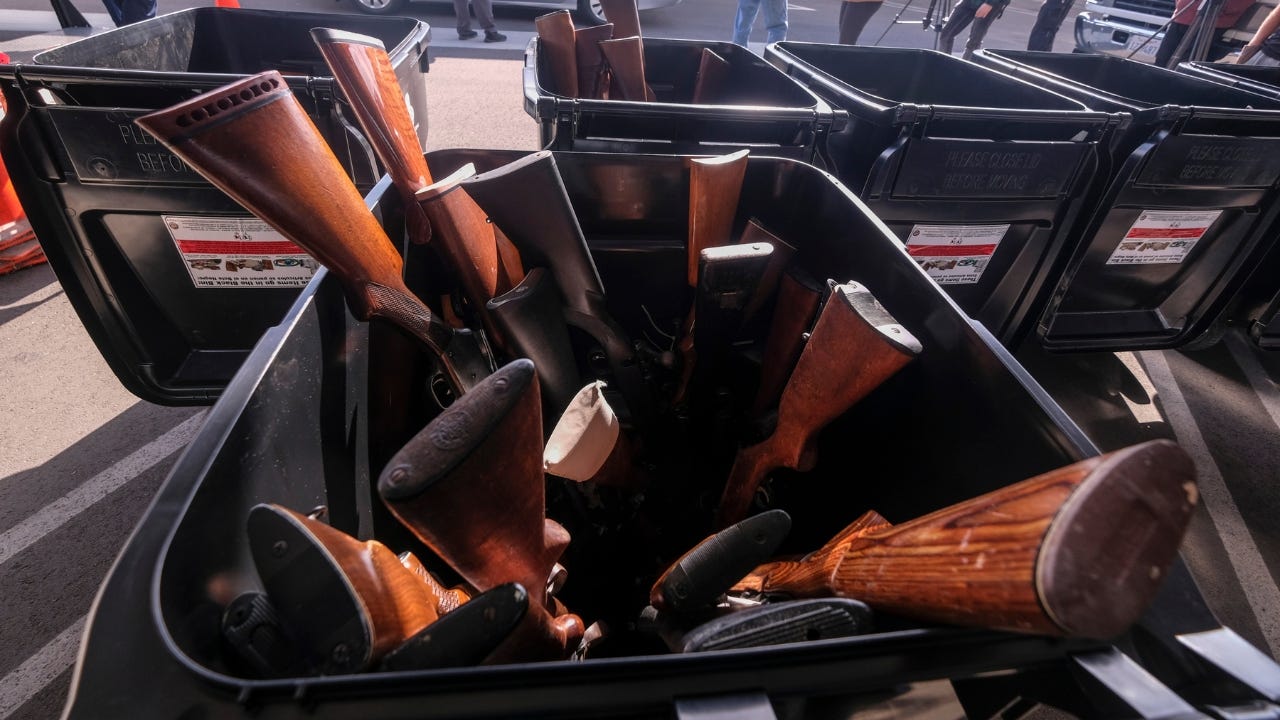
Australia has a proud tradition of strong, workable gun laws. We are proud of them because, after the Port Arthur massacre in 1996, the nation collectively said ‘enough.’ We chose not to normalise mass violence in the same way that some other nations have.
While these reforms have dramatically reduced gun-related violence and mass attacks in Australia, it is now clear that they do not go far enough. The fact that an individual on a visa, with a known ISIS-radicalised son, was able to access six fully licensed firearms while living in suburban Sydney is an obvious legislative failure.
Firearm ownership in Australia is a privilege, not a right. Visa holders should not be granted licenses for firearms outside of work-related requirements, and there should be a firm cap on the number of firearms owned by suburban residents nationwide. There are also changes to the proscription of allowable weapons, particularly removing the lever-action shotgun that Tony Abbott allowed onto the list in 2015. Whilst guns are an efficient tool and a hobby for some, that efficiency and fun cannot come at the cost of public safety, health, and overall well being.
Hate Preaching and Anti-Semitism
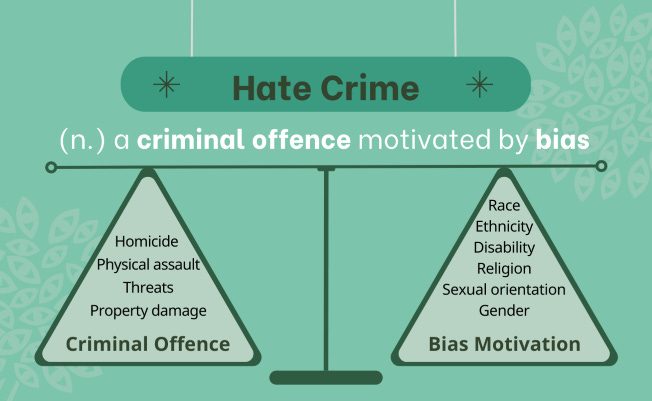
It has already been established that a well-known hate preacher has direct links to the younger, overtly radicalised attacker. This individual operates in Sydney and has become infmaous for skirting Australia’s laws in order to preach views that we simply do not want spreading in our society. Another of his followers attacked an Orthodox priest with a knife inside a church in 2024. That is the type of person that needs to be targeted by any new hate preaching laws.
This form of hate preaching is banned in moderate Muslim nations, as well as in the United Kingdom and Germany. Australia does not need to tolerate what those countries have already rejected. The precedent exists and it is highly persuasive. Hate speech laws must change, and it is welcome that both federal and state Labor governments have announced reform in this area.
This issue also extends to antisemitism. Since October 7, antisemitic attacks in Australia have increased significantly. Australians can stand up for the rights of Palestinians and support their pursuit of self-determination, but we cannot import foreign conflicts and violence onto Australian streets. We can talk and be pragmatic, work with each other to figure things out, but we cannot commit political violence.
We are a country that leaves other nations’ troubles in those other nations. As a first-generation Australian with family ties to a foreign land of Trouble (hint), it is both strange and deeply upsetting to witness this kind of political violence occurring here. There is an unspoken social rule for migrants and their descendants in Australia: you do not bring hatred, fear, and division with you. You leave those things behind. That rule is fair, reasonable, and central to why Australia remains a peaceful country.
Australia is a young nation made up of people from every corner of the world. If we want to keep it peaceful, we must adhere to those shared social rules. Violence driven by foreign conflicts has no place on Australian beaches. It is antithetical to the Australian way of life, and it does not belong here. That is why it is acceptable and proportional to shut down hate preaching, in all of it’s forms, to maintain one of the most important ideas that keeps Australia ‘the lucky country’.
Final Thoughts
Finally, in sum of the aforementioned, Australia needs to grant ASIO and the AFP extended powers to be exercised against radicalised individuals and groups in Australia to search and seize in an ongoing manner, provide interventionist diversion programs, restrict gun laws for the suburbs, and shut down any form of religious or social hate preaching. This should cover religous hate, as well as far-right ideology, because over 50% of ASIO’s work goes into stopping right wing extremist attacks in Australia currently. This can be done whilst still maintaining an appropriate degree of representative and responsible government, through the proscription of organisations in a public manner. That way, we can hold the government accountable at elections and through proportionate opposition if they go too far and proscribe the wrong ideologies. This should not happen again, and hopefully the announced measures go far enough at curbing political violence in Australia.
A note on the Opposition (note: admittedly bipartisan, but an important reply to the LNP):
The LNP opposition has, unfortunately, made reform in this area difficult. Historically, the LNP has sought to repeal hate speech laws rather than strengthen them, often prioritising free speech concerns over the harms of hate speech. However, now we see, the harms of hate speech. They have blocked earlier reforms, contributing to Labor’s reduced overall emphasis in this area of law up until this point. Further, in the wake of the attack, they have led with emotion, which is destabilising and dangerous. Rather than call for collective calm and pragmatism, they have been shrieking for retribution. Further, Morrison was the PM when the ASIO investigation was dropped against the young attacker, and Abbott got the rapid-fire shotguns put onto the allowed list of weapons (to shore up support from the then independent liberal democratic senator, David Leyonhjelm). Now is the time to work together in a pragmatic way to develop workable solutions, and then transcribe those patiently to the public, not give in to emotionally driven divisive rhetoric and try and target the emotional resonance of the community who was attacked, at the expense of that community, as well as others. Whilst this is admittedly becoming long winded, the final point is that Labor did not do this to the LNP government after the 2015 Lindt Cafe Siege. This is a dangerous knee-jerk reaction that will only fuel any existing divides further and lead to alienation, when we should be bringing people together.