
Iran Protests (Part 2)
Analysis & Commentary

While in my piece, Iran Protests Part 1, I stated that I would be waiting until the situation was resolved, I feel compelled to provide a quick update on what has been happening on the ground in Iran. This is due to the drop-off in the Western media cycle, while interesting developments have continued to take place, without adequate coverage.
Security Crackdown and Militias
Just after I posted my previous piece, the Iranian regime quickly escalated its violent crackdowns on Iranian protesters. Not only did it send security forces to open fire on, and kill at least 3,000 protesters (per rights groups claims), but it also reportedly relied on its Iranian backed militias from Iraq and Lebanon.
According to Amnesty International, evidence has been reviewed showing mass unlawful killings committed at scale, including against mostly peaceful protesters and bystanders. Having personally viewed several of the types of videos that Amnesty International has verified, I can say that this assessment appears credible.
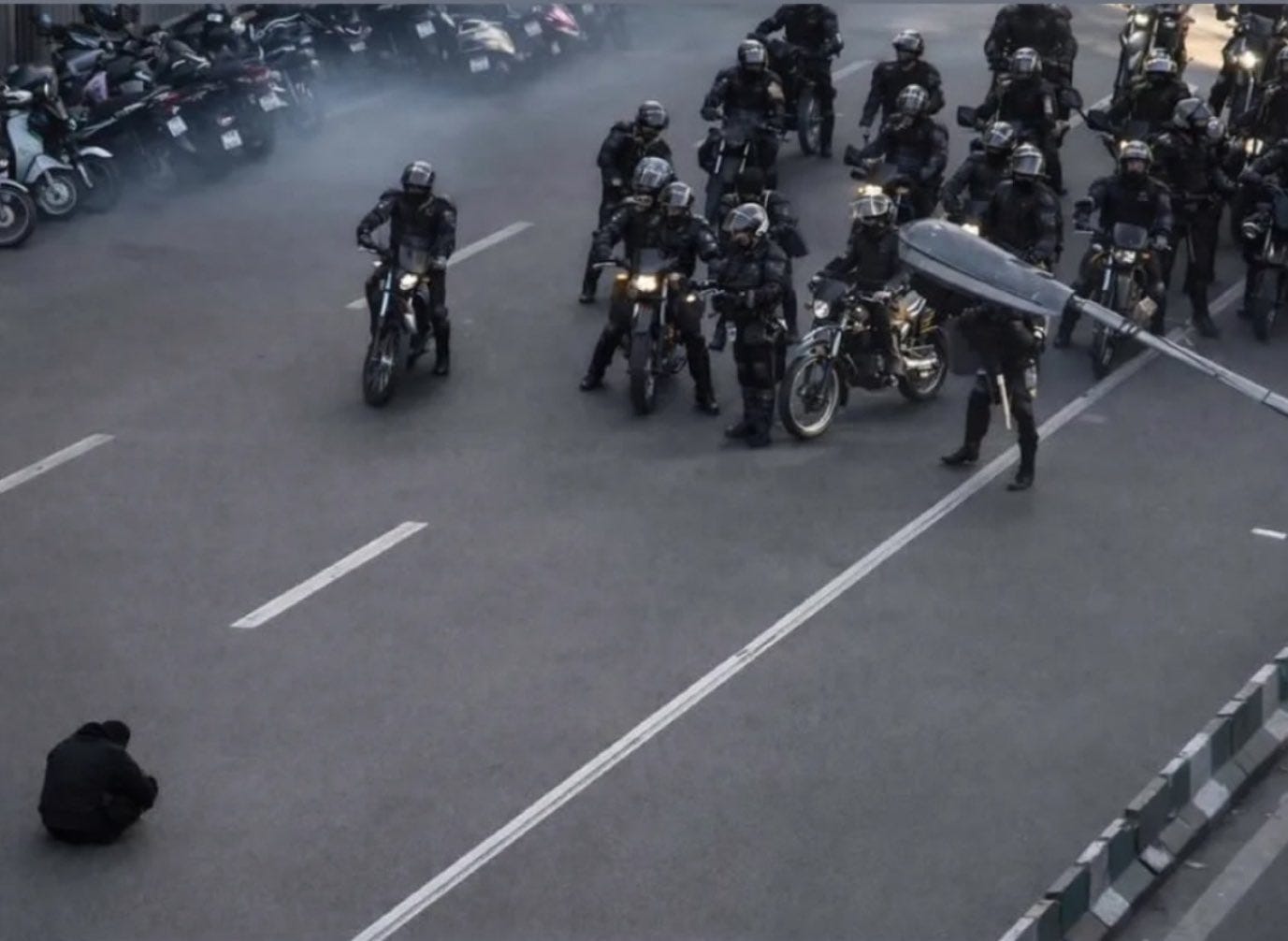
While I will not link those here, you can also watch a video of some of the public funerals of those civilians killed by security personnel here.
In speaking to an on-the-ground source, albeit unverified, they stated that these militias, likely from the Popular Mobilisation Forces (PMF) started crossing the Iraq-Iran border around the start of the protests.
The PMF is a paramilitary umbrella group comprised of around 50 primarily Shia armed factions, and although it reports to the Iraqi Prime Minister, most groups under the umbrella are firmly aligned with Iran’s Ayatollah. They fought against ISIS, and provide Iran with a foothold inside Iraq due to previous wars and tensions (see Iran-Iraq War).
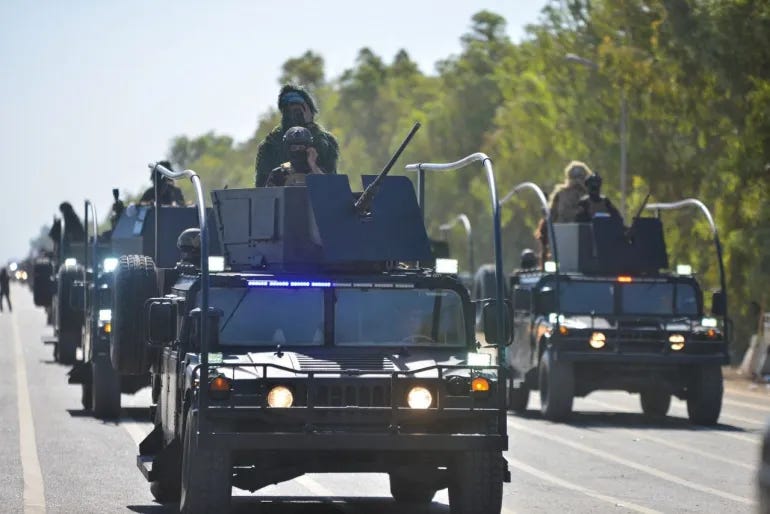
They then made their way into the country, and harassed and violently cracked down on protesters.
Utilising militias is a well-known tactic employed by regimes, to avoid accountability for their actions. We saw this with Russia engaging its militias in Ukraine to stoke increasing tensions along the border prior to the full-scale Russian Invasion of Ukraine in 2022. This is not a new tactic. These militias were also utilised by the Iranian regime during the 2009 protests and again in 2022-2023.
Further, the Internet and cellular blackout remains. However, these attempts at blocking off communication to the outside world are never 100% effective. Currently, users of Starlink and other smuggled-in internet services are reportedly experiencing packet loss rates of between 30% and 80%.
This still makes it difficult to get messages out, as you essentially need to let messages sit and wait, to try again later. That translates to low volume. The regime claims that it will end the blackout in a phased approach. SMS has now been restored, and Internet access will come later - with no clear timeline. ‘Soon’, they say. This blackout continues to create anxiety and frustration across Iran, with fears of an escalation in the crackdown, as well as business online services being disrupted.
For now, the protesters have fled back home. Likely due to the civilian killings by security forces and militias, combined with communication blackouts, and the mass mobilisation of security forces on the streets.
American Involvement and a Potential Paradigm Shift
Trump also announced he was looking into options to support the protesters and try and damage the regime. He was, in particular, looking at his favourite weapon of choice - airstrikes. However, in an apparent marked change in American foreign policy, the Pentagon reportedly pushed back, highlighting concerns about what may come next if the regime fell due to foreign intervention.
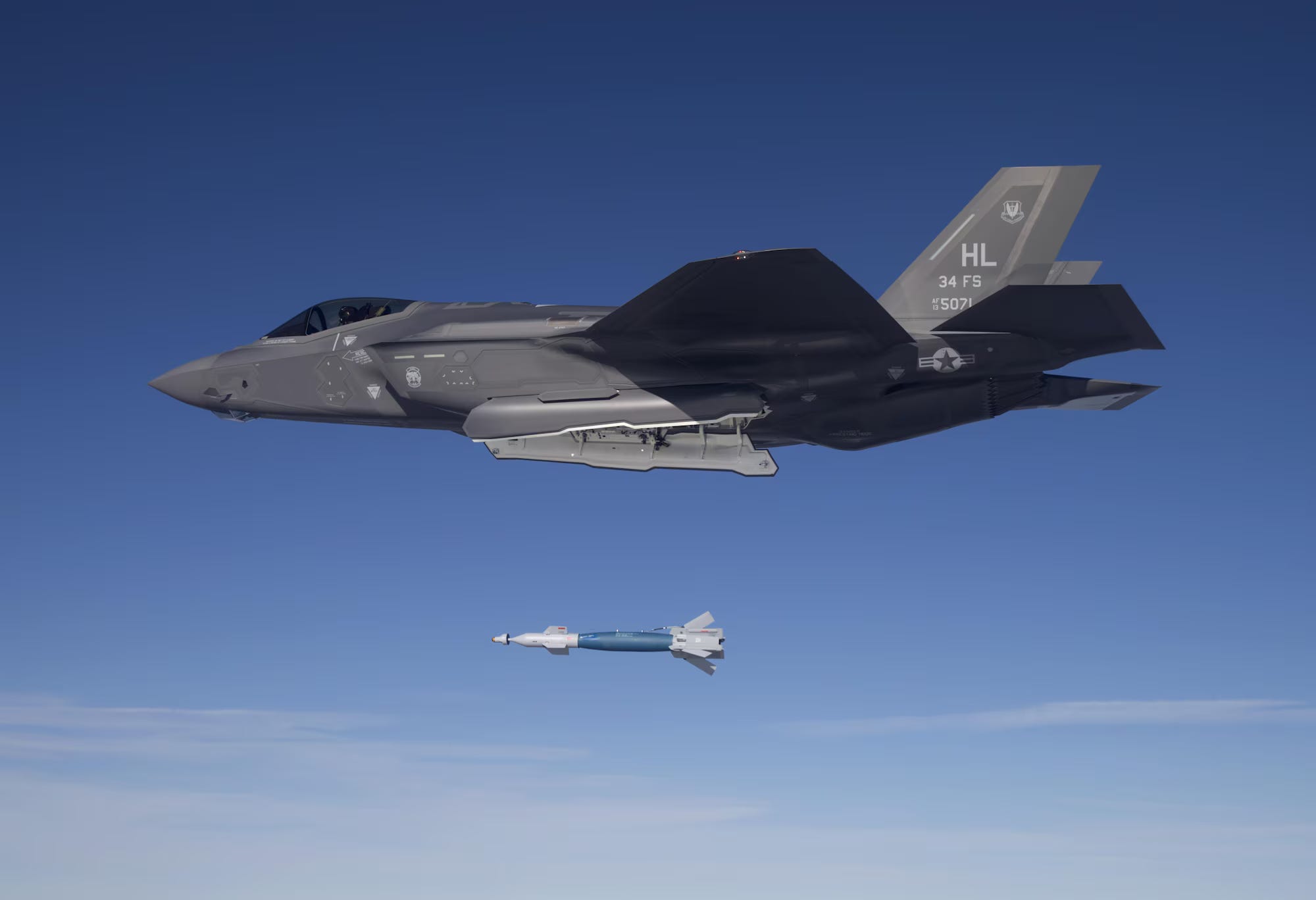
This, as well as the Maduro snatch-and-grab leading to his loyalists still being in charge of Venezuela, marks a potential paradigm shift in U.S. foreign policy when it comes to overthrowing foreign governments. Although you still have your push-hawks for outright regime change inside the U.S, it is now believed that the Americans have shifted that policy to a more cautious and selective intervention.
Now, selective tools are the preference: sanctions, targeted operations, diplomatic isolation, indirect pressure, and support for internal opposition, as opposed to direct leadership and ruling party decapitation.
The G7 has taken a similar stance, pushing for more sanctions against the regime if the government continues to crack down on protests and dissent.
While this is not declared doctrine, it would be a welcome shift. It is now widely accepted that outright regime change, more often than not, leads to awful results. Libya and Iraq offer cautionary examples. Libya collapsed into prolonged instability, including documented open-air slave trading, while Iraq’s power vacuum enabled ISIS to gain a foothold before it was eventually defeated by multiple nations’ forces.
Trump is still sending mixed messages about airstrikes, as well as through naval manoeuvres in the Persian Gulf, likely to put the regime on notice, so that they fear repercussions if they continue violence and mass-execution of protesters. Allegedly, according to U.S officials, the regime will not go ahead with its previously planned public executions (usually by hanging on cranes on the back of trucks). This news came from an SMS from a top Iranian official to the U.S. That decision is welcome.
What is the Regime Saying?
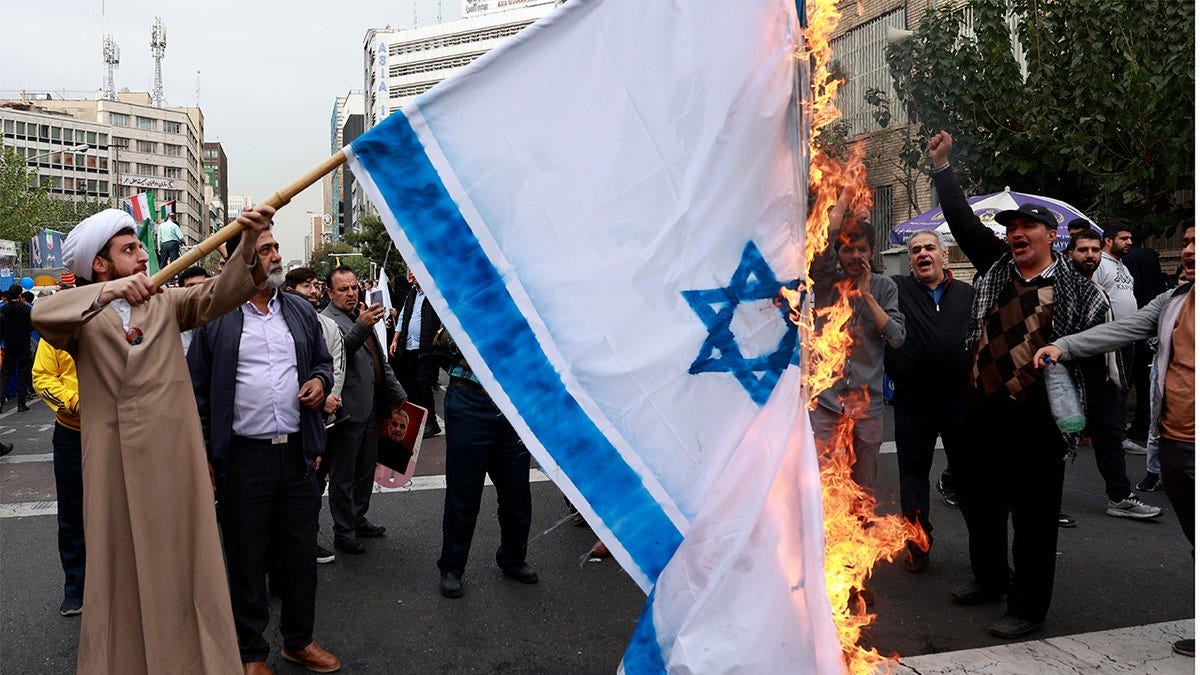
Iran is blaming foreign elements, such as Israel and the United States. A right-wing Israeli television report fuelled rumours that Israel supplied and armed the protesters. Channel 14 Israel, which supports Netanyahu, said in an unsourced report that ‘foreign actors’ were arming anti-regime protesters in Iran. That same individual, on social media, stated that ‘Anyone is free to guess who we’re talking about’. This link remains too tenuous to be treated as fact at this stage, however, Israel has clear motivation to back any attempt at bringing down the Iranian Regime due to its funding of Hezbollah and Hamas and Iran’s general hard line stance against Israel.
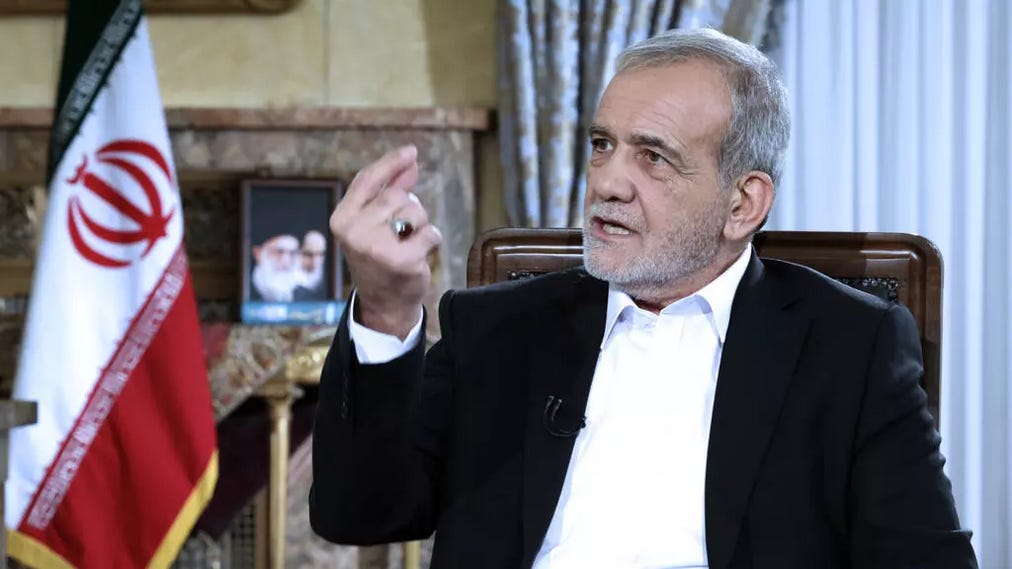
Russia’s Putin has now also gotten involved, allegedly offering to mediate tensions between Iran’s President Pezeshkian and Israel’s Prime Minister Netanyahu. Any form of mediation to cool tensions between these rival nations is welcome, for stability of the region.
The President of Iran says that the people’s economic grievances need to be heard and that the government is ready to listen. He has emphasised engaging with protesters, stating ‘we should sit with them’ to hear their grievances. However, while that would be welcome, it comes in stark contrast to the regime’s behaviour toward the protesters thus far. It is likely merely a tool of appeasement utilised to send the protesters home, alongside brutal tools of repression.
In Sum
The crackdown has been bloody and has sent protesters fleeing back to their homes. The Regime is alleging foreign interference, while reportedly relying on foreign-backed, Iranian-aligned militias and security personnel to violently crackdown on what clearly began as economic protests. The foreign response, suggesting a paradigm shift in Western foreign policy regarding regimes, is welcome. We now know what happens when you decapitate governments overnight, and it is hoped that this hard line type of regime change is a thing of the past.
A follow up piece will come at the conclusion of the Iranian government’s crackdown, when all restrictions are lifted. It will be interesting to see if the regime listens to the concerns of the protesters, even after committing their bloody reprisal against their own people.
References
Al Jazeera (2026) Iran protests live: Tehran says Trump encouraging political destabilisation, 14 January. Available at: https://www.aljazeera.com/news/liveblog/2026/1/14/iran-protests-live-tehran-says-trump-encouraging-political-destabilisation (Accessed: 18 January 2026).
Al Jazeera (2026) Iran restores SMS as phased rollback of internet blackout begins, 17 January. Available at: https://www.aljazeera.com/news/2026/1/17/iran-restores-sms-as-phased-rollback-of-internet-blackout-begins (Accessed: 18 January 2026).
CNN (2026) Iranian protester faces execution, video report, 14 January. Available at: https://edition.cnn.com/2026/01/14/world/video/iranian-protester-faces-execution-isobel-yeung-digvid (Accessed: 18 January 2026).
Financial Times (2026) US weighs options as Iran protests intensify, January. Available at: https://www.ft.com/content/cb0f5f9e-2b96-46b0-aef3-141cdd3ac37f (Accessed: 18 January 2026).
France 24 (2026) Iran to press capital crime charges for ‘rioters’, prosecutors say, 13 January. Available at: https://www.france24.com/en/live-news/20260113-iran-to-press-capital-crime-charges-for-rioters-prosecutors (Accessed: 18 January 2026).
Iran International (2026) Reports of mass killings and militia involvement in Iran protests, January. Available at: https://www.iranintl.com/en/202601167778 (Accessed: 18 January 2026).
MSN News (2026) Reports: Shiite militias assisted Iran protest crackdown, January. Available at: https://www.msn.com/en-gb/news/world/reports-shiite-militias-assisted-iran-protest-crackdown/ar-AA1UnbqL (Accessed: 18 January 2026).
Newsweek (2026) Iran regime protests live: Trump weighs strikes, January. Available at: https://www.newsweek.com/iran-regime-protests-live-trump-war-strikes-11356005 (Accessed: 18 January 2026).
Reuters (2026) Death toll in Iran protests over 3,000, rights group says, 17 January. Available at: https://www.reuters.com/world/middle-east/death-toll-iran-protests-over-3000-rights-group-says-2026-01-17/ (Accessed: 18 January 2026).
RFI (2026) How Iran is enforcing an unprecedented digital blackout to crush protests, 12 January. Available at: https://www.rfi.fr/en/international/20260112-how-iran-is-enforcing-an-unprecedented-digital-blackout-to-crush-protests (Accessed: 18 January 2026).
The Guardian (2026) Senior Iranian cleric calls for protester executions in defiance of Trump claims, 17 January. Available at: https://www.theguardian.com/world/2026/jan/17/senior-iranian-cleric-calls-for-protester-executions-in-defiance-of-trump-claims (Accessed: 18 January 2026).
The National (2025) Who are the main Iran-backed militias in Iraq?, 7 April. Available at: https://www.thenationalnews.com/news/mena/2025/04/07/who-are-the-main-iran-backed-militias-in-iraq/ (Accessed: 18 January 2026).
Times of Israel (2026) Right-wing Israeli TV report fuels rumors Israel supplying arms to Iran protesters, January. Available at: https://www.timesofisrael.com/right-wing-israeli-tv-report-fuels-rumors-israel-supplying-arms-to-iran-protesters/ (Accessed: 18 January 2026).
Wall Street Journal (2026) Massacre in Iran as protests crushed, January. Available at: https://www.wsj.com/world/middle-east/massacre-iran-protests-8731e4cb (Accessed: 18 January 2026).
Additional sources
Open Source Intelligence (OSINT)
Private sources (on-the-ground testimony; unverified)
Excellent breakdown of how the regime deploys foregin militias to outsource repression. The point about this tactic creating deniability is spot-on, I saw similar patterns during the 2022 protests where accountability just evaporates. What really makes this anaysis stand out is connecting the Pentagon's pushback to broader lessons from Libya and Iraq, feels like we might actualy be learning from past mistakes for once.
ADD:
The HRNA group is, in my opinion, the most verified source of deaths, arrests, executions, Broadcast forced confessions, and more.
Each day, they are producing articles such as the one below, and the numbers just keep on growing.
See below:
https://www.en-hrana.org/day-twenty-four-of-the-protests-continued-communications-blackout-and-international-warnings-of-crimes-against-humanity/?hilite=day+24